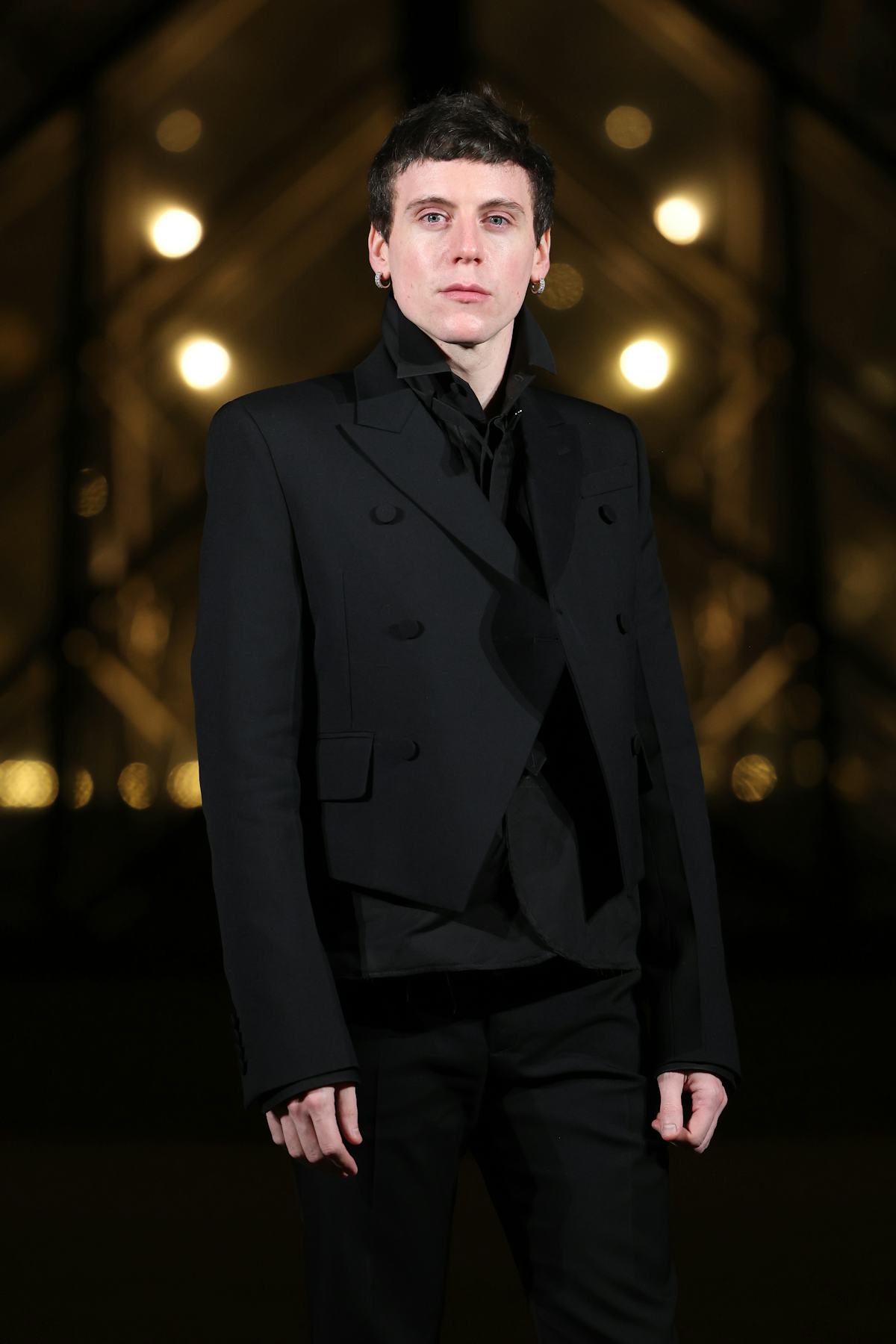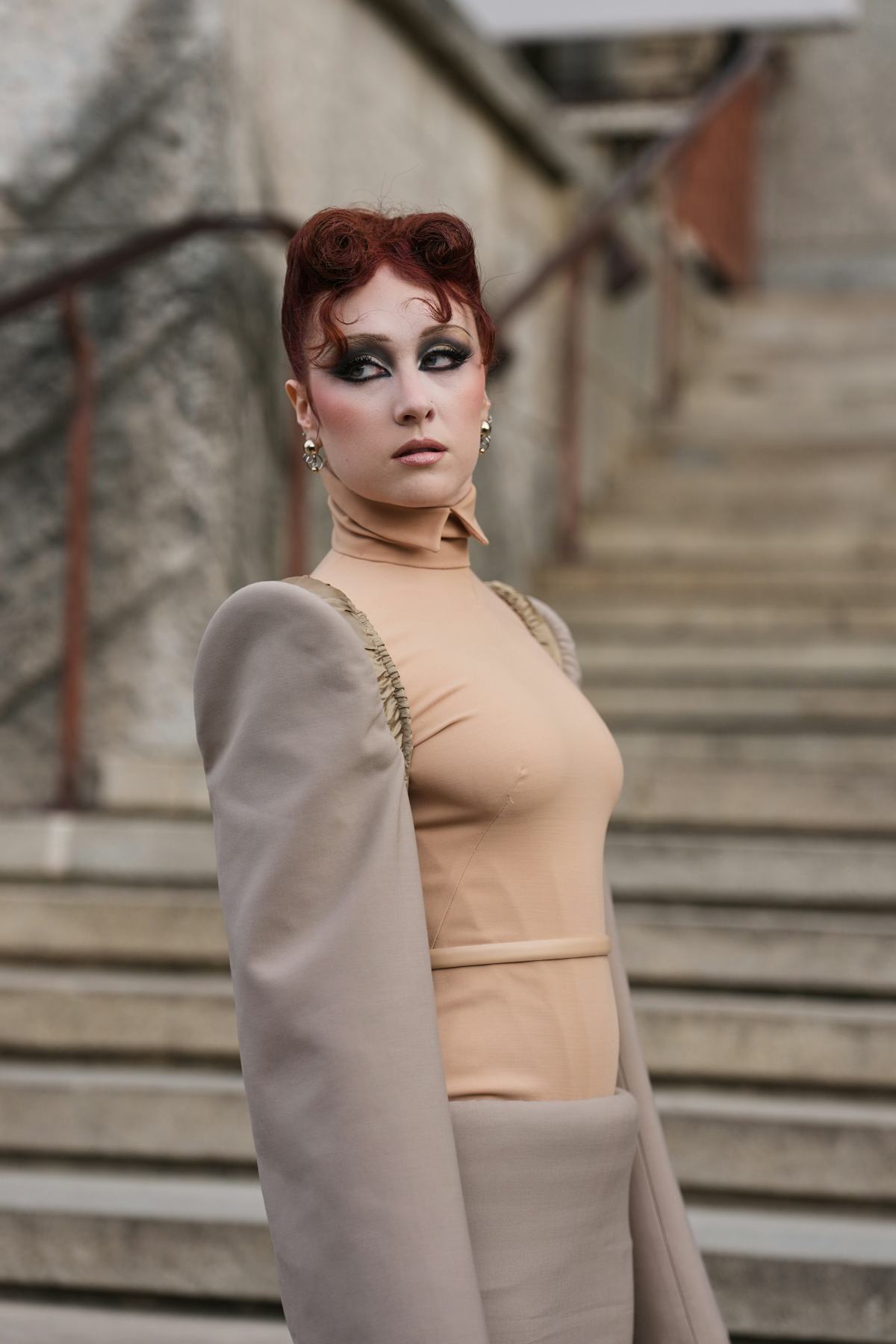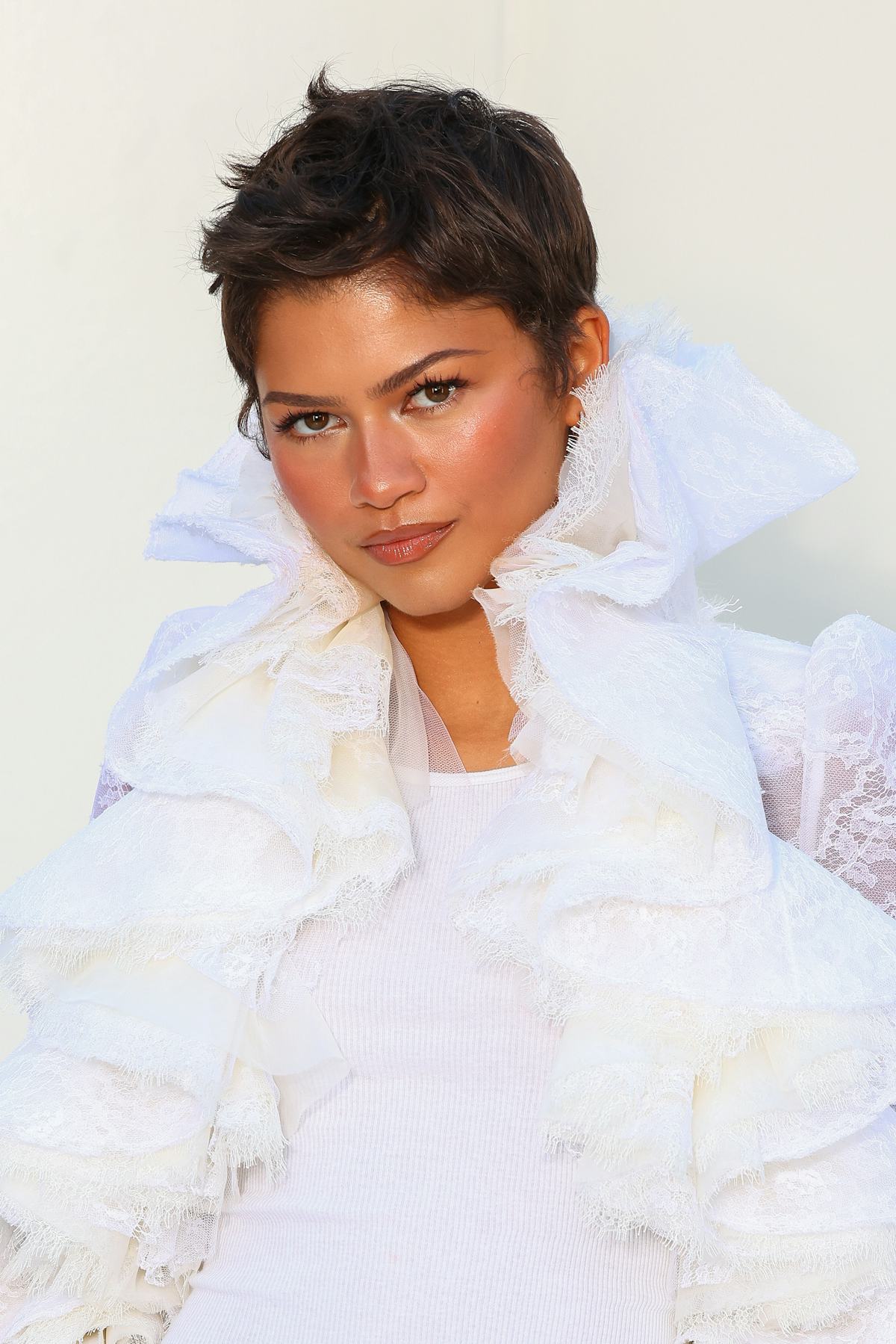

Rome’s National Gallery of Modern and Contemporary Art has never seen so many baguettes. Fendi baguettes, that is. The brand’s iconic bag was slung on the shoulders of nearly every guest who gathered at the museum last night for Maria Grazia Chiuri’s couture debut. The purse’s patron saint, Sarah Jessica Parker, was there too, greeting other guests and taking videos and photos of the gilded paintings that hung in bulk across the walls of the first gallery after you enter.
Further inside was a recreation of a 1985 exhibition of Karl Lagerfeld’s work at Fendi. It includes hundreds of his original sketches, a moving vignette featuring some of his most famous fur designs, and the 1977 film “Histoire D’Eau” directed for the house by Jacques de Bascher. In its first iteration, as Chiuri pointed out before the couture show, the exhibition caused an uproar because people felt that fashion didn’t belong in a museum. “It was not inside the cultural environment,” Chiuri noted. “They believed it was artisan work, that it was only a business.”
Throughout her career — primarily during her nearly decade-long tenure as creative director of Dior — Chiuri has centered her process around the intersections of art and fashion. She has supported young and established female artists through collaborations, staged shows inside cultural institutions, and, most recently, is leading the restoration of the Teatro della Cometa in Rome.

Chiuri’s return to Fendi, where she worked from 1989 to 1999 and where she designed the original Baguette, has been marked thus far by two streamlined ready-to-wear collections featuring foundational slip dresses in delicate lace, sparse of color. There hasn’t yet been an artist collaboration, or anything much louder than a lovely, intentional whisper — save for the relaunch of the Baguette bags, which feature intricate beadwork, playful patterns, and touches of sparkle. Her hope is to bring the focus back to the clothes and to the foundations of Fendi, and to its elegant, sophisticated essence, with luxury wardrobe essentials and outerwear.
Couture, by definition, is art. It is one-of-a-kind, made-to-order, and executed by fashion’s most elite ateliers. As we’ve seen over the last week in Paris, couture collections can run the gamut from red-carpet-worthy to otherworldly, with extraordinary embroideries and sculptural silhouettes, some of which are molded into alien-esque shapes or dresses that quite literally light up. Most come with waist-cinching corsets, and many, especially this season, are actually molded to a woman’s breasts and torso. This Fendi couture collection had none of these sorts of theatrics. There wasn’t anything meme-worthy or fit for a pop starlet to go viral on the internet. No boning, pannier, or hard surface in sight. Instead of crafting garments around the body, Chiuri simply let the body inform the art, and the results were beguiling.

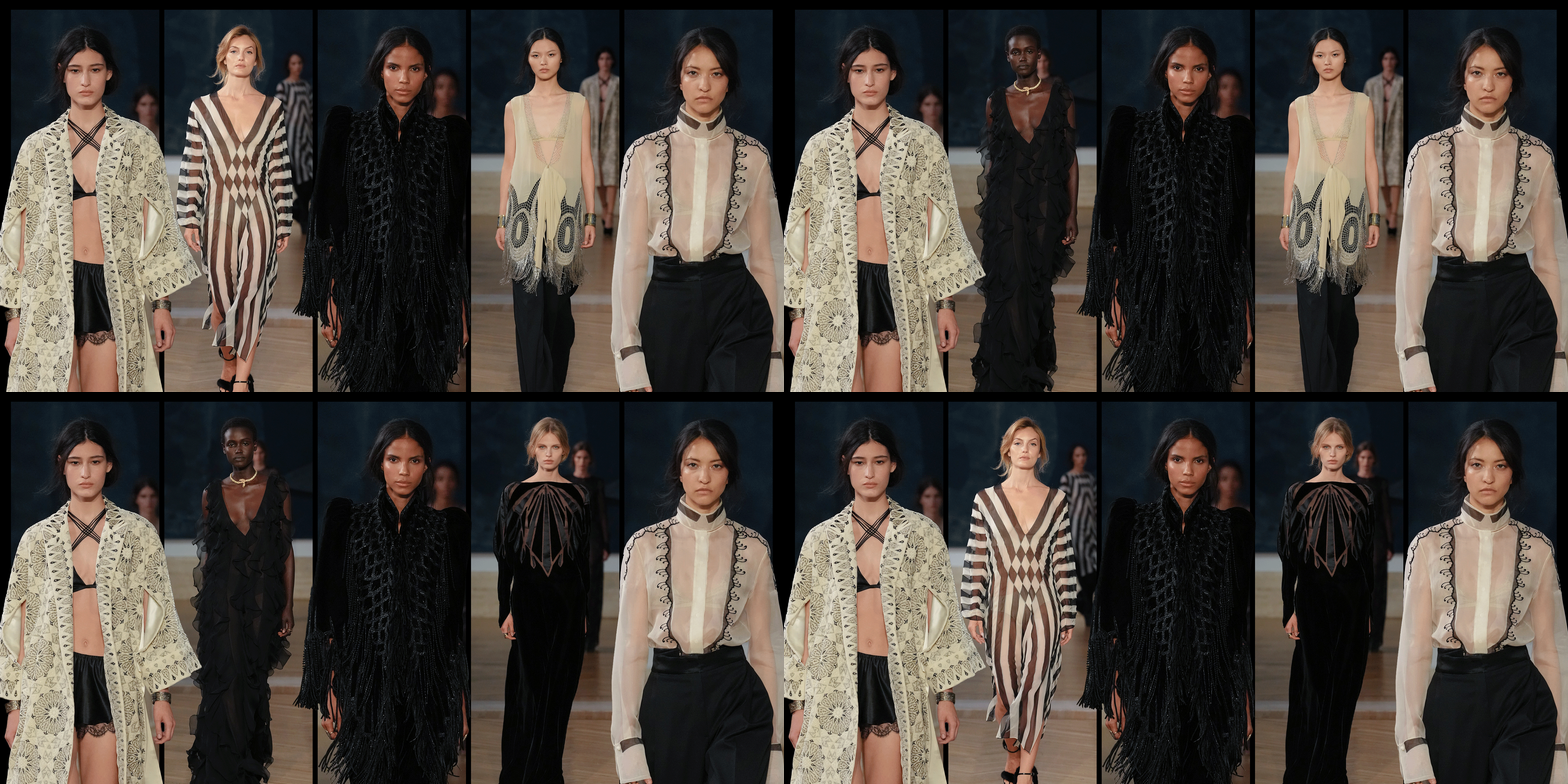
The first look that made its way down the runway crystallized this vision: a sheer, black-and-white striped caftan that billowed delicately behind the model as she walked. The dress was inspired by Emilie Flöge, Gustav Klimt’s companion and muse, as well as a fashion designer who specialized in fluid shapes that were, at the time, the antidote for women who didn’t want to be tortured by corsets. More effortless, uncomplicated silhouettes followed, including 1920s-inspired drop-waist silhouettes and Deco details — a pair of tops that were shimmery and beaded, one designed with a crochet technique and fringe at the hem, were styled over flowy trousers and little bralettes.
There were gowns in bias-cuts, some designed with transparent lace, leather netting, and fluttery ruffles, all nods to Chiuri’s masterful articulation of feminine strength and sensuality. The suiting and outerwear were strong too. Again, minimalist in nature but compelling because of the way Chiuri translated couture-level tailoring into real-life wardrobe items. A modern duster coat in black and white was divine — imagine wearing such a piece with a pair of jeans and a T-shirt. The idea of that unfettered glamour was what Chiuri was getting at here, and what an opulent way to indulge in high fashion.

More than making couture something more freeing and palatable for a wider swath of women, Chiuri said that she wanted to drive home a point about our own relationship to clothes. “We have to remember that the first thing we desire about clothes is the way they feel on our bodies,” Chiuri said. “You feel the material is soft on your body, and you feel well.” She added, “Fashion is about what’s for you, and you can embody your idea of yourself but in a lighter way.” Chiuri may have filled the museum last night with VIPs’ colorful Baguette bags because she’s as good a product designer as she is a couturier, but the real message of her first haute couture outing for Fendi wasn’t about flash — it was about freedom.